


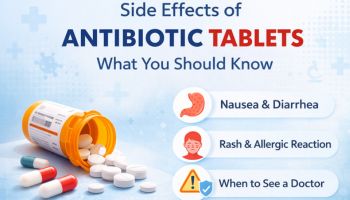



Side Effects of Antibiotic Tablets: What You Should Know
Mar 06, 2026
Antibiotic tablets are widely used to treat bacterial infections and are among the most important medicines in modern healthcare. While they are generally safe when prescribed by a doctor, antibiotic tablets can sometimes cause side effects.
Understanding these potential side effects helps patients take antibiotics safely and know when to seek medical advice.
In this guide, we will explain the common side effects, rare complications, and safety precautions associated with antibiotic tablets.
For a complete overview of antibiotic uses, dosage instructions, and safe purchasing guidelines, read our detailed guide on Antibiotic Tablet: Uses, Dosage, Side Effects & Safe Online Purchase Guide.
Quick Answer: What Are the Side Effects of Antibiotic Tablets?
The most common side effects of antibiotic tablets include:
-
Nausea
-
Diarrhea
-
Stomach discomfort
-
Headache
-
Skin rash
Most side effects are mild and temporary, but some reactions may require medical attention.
Common Side Effects of Antibiotic Tablets
Most people who take antibiotics experience little to no problems. However, some mild side effects may occur.
1. Digestive Issues
Digestive problems are the most frequently reported side effects.
These may include:
-
Nausea
-
Vomiting
-
Stomach pain
-
Diarrhea
Antibiotics can disrupt the natural balance of bacteria in the digestive system, which may lead to temporary gastrointestinal discomfort.
Taking the medication with food (if allowed) may reduce stomach irritation.
2. Diarrhea
Antibiotics sometimes destroy beneficial bacteria in the gut, which can lead to diarrhea.
This type of diarrhea is usually mild and resolves after the treatment course is completed.
However, severe or persistent diarrhea may indicate a more serious condition and should be evaluated by a doctor.
3. Skin Reactions
Some people may develop mild skin reactions such as:
-
Rash
-
Itching
-
Redness
These reactions may occur due to sensitivity to certain antibiotics.
If the rash worsens or spreads rapidly, medical advice should be sought immediately.
4. Yeast Infections
Antibiotics can disrupt the normal balance of microorganisms in the body, which may lead to fungal infections.
Symptoms may include:
-
Itching
-
Irritation
-
White discharge
These infections are usually treatable with antifungal medication.
Serious Side Effects of Antibiotic Tablets
Although rare, some serious side effects may occur.
1. Severe Allergic Reaction
A severe allergic reaction to antibiotics is called anaphylaxis, which requires immediate medical attention.
Symptoms may include:
-
Difficulty breathing
-
Swelling of face or throat
-
Rapid heartbeat
-
Severe rash
Emergency medical care should be sought immediately if these symptoms appear.
2. Antibiotic-Associated Colitis
In rare cases, antibiotics can cause inflammation of the colon due to bacterial imbalance.
Symptoms may include:
-
Severe diarrhea
-
Abdominal pain
-
Fever
This condition requires prompt medical evaluation.
3. Liver or Kidney Effects
Some antibiotics may affect liver or kidney function, particularly in people with existing health conditions.
Doctors typically consider these factors before prescribing antibiotics.
How to Reduce the Risk of Side Effects
Taking antibiotics responsibly can reduce the chances of complications.
Follow these safety tips:
✔ Follow the prescribed dosage
✔ Complete the full course of treatment
✔ Do not skip doses
✔ Avoid taking antibiotics without medical advice
✔ Inform your doctor about allergies or medical conditions
For a full explanation of proper dosage and timing, see our guide on how to take an antibiotic tablet correctly.
Antibiotics and Gut Health
Antibiotics can temporarily disrupt the balance of good bacteria in the digestive system.
Some doctors recommend probiotics or probiotic-rich foods such as:
-
Yogurt
-
Kefir
-
Fermented foods
These may help restore gut balance during or after antibiotic treatment.
When to Contact Your Doctor
Seek medical advice if you experience:
-
Severe diarrhea
-
Persistent vomiting
-
High fever
-
Severe rash
-
Difficulty breathing
Early medical attention helps prevent complications.
Who Is More Likely to Experience Side Effects?
Certain groups may be more sensitive to antibiotic side effects.
These include:
-
Children
-
Elderly patients
-
Pregnant women
-
Individuals with liver or kidney disease
-
People with antibiotic allergies
Doctors adjust treatment plans accordingly.
Featured Snippet Section
FAQs About Antibiotic Tablet Side Effects
Do all antibiotic tablets cause side effects?
No. Many people take antibiotics without experiencing any side effects.
How long do antibiotic side effects last?
Most mild side effects disappear after the medication course is completed.
Can antibiotics cause stomach problems?
Yes. Digestive issues such as nausea or diarrhea are common side effects.
Should I stop antibiotics if I experience side effects?
Do not stop antibiotics without consulting your doctor unless the reaction is severe.
Final Thoughts
Antibiotic tablets are effective and life-saving medicines when used properly. While side effects can occur, most are mild and temporary.
Understanding these effects allows patients to use antibiotics safely and recognize when medical attention is needed.
Always follow your doctor’s prescription, complete the full treatment course, and avoid self-medication.
Responsible antibiotic use protects your health and helps prevent antibiotic resistance.
Recent Post

Irregular Periods: Causes, Symptoms & Treatment Options

What is Mounjaro? Uses, Benefits & How It Works

Home Remedies vs Gas Tablets: What Works Faster?
When to See a Doctor for Gas Problems

Best Gas Tablet for Quick Relief from Bloating

What Causes Gas and Bloating in the Stomach?
Gas Tablet: Uses, Benefits, Dosage, Side Effects & Safe Usage Guide
How to Take an Antibiotic Tablet Correctly: Dosage & Timing Guide
Antibiotic Tablet: Uses, Dosage, Side Effects & Safe Online Purchase Guide
Best Cholesterol Lowering Medicine Online: Types, Uses & Side Effects Explained
Licensed Pharmacy
Drugs & Cosmetics Act 1940
Licensed Pharmacist
Mirza Askary Ali, B.Pharm · #031171/A1
Nationwide Delivery
Speed Post · All India Pincodes
Drug License Active
TS/HYD/2021-82149 · Form 20 & 21