


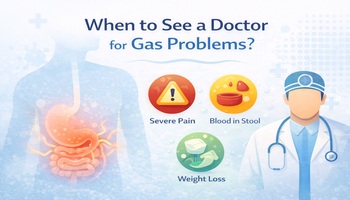



When to See a Doctor for Gas Problems
Apr 10, 2026
Gas and bloating are common digestive issues that most people experience occasionally. In many cases, they are harmless and caused by diet or lifestyle habits. However, when gas problems become frequent, severe, or persistent, they may indicate an underlying health condition.
Knowing when to seek medical help is important to avoid complications and ensure proper treatment.
Quick Answer: When Should You See a Doctor?
You should see a doctor if gas problems are:
- Frequent or long-lasting
- Severe or painful
- Associated with other unusual symptoms
Normal Gas vs Serious Gas Problems
Normal Gas Symptoms
Occasional gas is completely normal and may include:
- Mild bloating
- Passing gas
- Burping after meals
- Temporary stomach discomfort
These symptoms usually improve with simple changes like diet control or using a gas tablet.
When Gas May Be a Concern
Gas may indicate a serious issue if it:
- Happens regularly
- Gets worse over time
- Does not improve with lifestyle changes or medication
Warning Signs You Should Not Ignore
Certain symptoms along with gas and bloating may require immediate medical attention.
1. Persistent or Severe Abdominal Pain
If you experience strong or continuous stomach pain, it could be more than just gas.
2. Unexplained Weight Loss
Losing weight without trying may indicate an underlying digestive problem.
3. Blood in Stool
This is a serious symptom that requires immediate medical evaluation.
4. Frequent Vomiting or Nausea
Repeated vomiting along with gas may signal a digestive disorder.
5. Changes in Bowel Habits
Watch for:
- Ongoing constipation
- Chronic diarrhea
- Irregular bowel movements
6. Difficulty Passing Gas or Stool
This could indicate a blockage or serious intestinal issue.
7. Long-Lasting Bloating
If bloating lasts for weeks or keeps returning, it should not be ignored.
Possible Medical Conditions Behind Gas Problems
Frequent or severe gas may be linked to underlying conditions such as:
- Irritable Bowel Syndrome (IBS)
- Acid reflux (GERD)
- Lactose intolerance
- Food allergies or sensitivities
- Digestive infections
- Celiac disease
A doctor can identify the exact cause through proper diagnosis.
When Gas Tablets Are Not Enough
While a gas tablet can provide temporary relief, it does not treat underlying medical conditions.
If you find yourself:
- Taking gas tablets frequently
- Getting only short-term relief
- Experiencing recurring symptoms
…it’s time to consult a healthcare professional.
For proper usage and safety, read our guide on Gas Tablet: Uses, Benefits, Dosage, Side Effects & Safe Usage Guide.
What to Expect at the Doctor’s Visit
A doctor may:
- Ask about your symptoms and diet
- Review your medical history
- Recommend tests (if needed)
- Suggest treatment or lifestyle changes
Early diagnosis helps prevent complications and ensures effective treatment.
Tips to Prevent Serious Gas Problems
While some causes require medical treatment, you can reduce the risk of gas issues by:
Eating Mindfully
Avoid eating too fast and chew your food properly.
Avoiding Trigger Foods
Identify and limit foods that cause bloating.
Staying Active
Exercise helps improve digestion.
Managing Stress
Stress can affect your digestive system.
Recent Post

Irregular Periods: Causes, Symptoms & Treatment Options

What is Mounjaro? Uses, Benefits & How It Works

Home Remedies vs Gas Tablets: What Works Faster?

Best Gas Tablet for Quick Relief from Bloating

What Causes Gas and Bloating in the Stomach?
Gas Tablet: Uses, Benefits, Dosage, Side Effects & Safe Usage Guide

Side Effects of Antibiotic Tablets: What You Should Know
How to Take an Antibiotic Tablet Correctly: Dosage & Timing Guide

Antibiotic Tablet: Uses, Dosage, Side Effects & Safe Online Purchase Guide

Best Cholesterol Lowering Medicine Online: Types, Uses & Side Effects Explained
Licensed Pharmacy
Drugs & Cosmetics Act 1940
Licensed Pharmacist
Mirza Askary Ali, B.Pharm · #031171/A1
Nationwide Delivery
Speed Post · All India Pincodes
Drug License Active
TS/HYD/2021-82149 · Form 20 & 21